
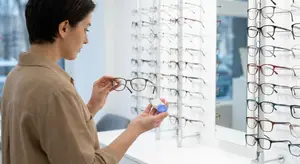
The right vision correction depends on your lifestyle, comfort, eye health, and visual needs. Someone working long hours on screens may need a different solution than a teenager playing sports or a parent juggling busy family schedules around Waterdown.
During comprehensive eye exams at Flamborough Family Eyecare, we help patients understand how each option works so they can choose what feels practical, comfortable, and easy to maintain.
How Glasses Are Different from Contact Lenses
Both eyeglasses and contact lenses correct refractive errors like:
-
Nearsightedness (myopia)
-
Farsightedness (hyperopia)
-
Astigmatism
-
Age-related blurry near vision (presbyopia)
Eyeglasses rest in front of the eyes using prescription lenses inside a frame. Contact lenses sit directly on the eye's surface and move naturally with eye movements.
Each option creates a different visual experience and daily routine.
Why Do Some Patients Prefer Eyeglasses?
Glasses remain one of the most popular forms of vision correction because they are simple, reliable, and easy to manage.
Minimal Maintenance Eyewear
Most eyeglasses only require regular cleaning and occasional adjustments. Patients who prefer lower-maintenance vision correction often appreciate this simplicity.
Sensitive or Dry Eye Relief
Patients experiencing dry eye symptoms, allergies, or eye irritation often feel more comfortable wearing glasses. Wind, indoor heating, screen use, and seasonal changes can already leave eyes feeling dry or fatigued.
Specialty Eyewear Adds Extra Protection
Modern eyewear can support much more than basic vision correction. Specialty eyewear options may include:
-
Blue-light filtering computer glasses
-
Prism lenses for binocular vision issues
-
Protective lens tints or coatings
-
Sports & safety glasses
Patients who spend time outdoors, work in demanding environments, or play sports often benefit from customized lens designs that support both comfort and eye protection.
Frames Allow Personal Style
Many patients enjoy using frames as part of their personal style. Some even keep multiple pairs for work, casual wear, or outdoor activities.
Why Do Some Patients Prefer Contact Lenses?
Contact lenses provide the freedom and flexibility many patients enjoy, especially for active lifestyles.
Wider Field of Vision
Because contact lenses move with the eye, they often provide more natural peripheral vision without frames blocking the sides of the field of view.
Stays Secure During Activities
Patients involved in sports, fitness, or outdoor recreation often prefer contacts because they stay stable during movement. Contacts also avoid issues like fogging during weather changes.
Contacts Pair Easily With Sunglasses
Many patients enjoy the convenience of wearing non-prescription sunglasses while using contact lenses outdoors.
Complex Vision Needs
Some patients require more advanced lens designs for comfort or vision clarity. Specialized contact lenses may help patients with:
-
High prescriptions
-
Irregular corneas (keratoconus)
-
Severe dry eye symptoms
-
Post-surgical recovery
-
Myopia management
Options like scleral lenses, rigid gas-permeable lenses, ortho-k lenses, and multifocal contacts can provide vision correction for patients who struggle with standard soft lenses.
Should You Choose Glasses, Contacts, or Both?
Many patients use both eyeglasses and contact lenses throughout the week.
For example:
-
Contacts for sports, work, or social events
-
Glasses for evenings, screen use, or allergy flare-ups
-
Prescription sunglasses for outdoor activities
Using both options often gives patients greater flexibility and comfort across different situations.
Find Your Fit With Eye Exams in Waterdown, ON
At Flamborough Family Eyecare, we take time to understand how patients use their vision every day. That conversation helps guide recommendations that feel realistic and comfortable in the long term.
The right vision correction should support your daily life without adding frustration or discomfort. Whether you prefer eyeglasses or contact lenses, personalized eye care can make the process feel much easier.
Book your eye exam to explore vision solutions designed with your comfort and long-term eye health in mind.
FAQs
Are contact lenses better than glasses?
- Neither option works best for everyone. The right choice depends on your eye health, lifestyle, comfort preferences, and daily activities.
What are specialized contact lenses?
- Specialized contact lenses are custom-designed lenses used for more complex vision or eye health needs.
Do glasses help with digital eye strain?
- Certain specialty lenses, including blue-light-filtering lenses and customized computer glasses, may help improve visual comfort during extended screen use.